
Any LiFePO4 battery must include a lifepo4 BMS, which is also known as a lifepo4 battery management system. You can consider it your system’s brains. It regulates the charging and discharging process to ensure the longevity of your battery. It additionally measures variables like voltage, current, and temperature and keeps an eye on the battery cells.
The principle on which the BMS battery management system LiFePO4 works is that lithium ions gradually separate from LiFePO4 to form FePO4 during the charging process. Lithium ions intercalate into FePO4 during the discharge process to create LiFePO4.
By the end of this blog, we will know about the details of lithium BMS and how BMS works. We will also understand how to choose the best BMS battery management system LiFePO4.
What are LiFePO4 Batteries and LiFePO4 BMS Systems?
LiFePO4 is the short form of Lithium Iron Phosphate. This is a material which is used in rechargeable batteries as the positive electrode. There are many advantages of using this battery, such as better thermal stability, the safety precautions, and in comparison to other lithium batteries, the life span is also longer.
Advanced power management, cell voltage balancing, and protection from overcharging, over-discharging, and short circuits are all provided by a BMS battery management system LiFePO4. For use in renewable energy systems, electric cars, or portable electronics, LiFePO4 battery management guarantees optimal battery life and longevity.
The BMS for lithium batteries carries out important functions like keeping an eye on and managing different facets of the battery’s functioning to guarantee both safety and maximum performance. It controls the process of charging and discharging, monitors the temperature, current flow, and cell voltage, and safeguards the battery against dangers like overcharging, over-discharging, and overheating.
Why Is a LiFePO4 BMS Essential?


BMS is an essential part of modern battery technology, particularly when it comes to lithium-ion battery applications. Monitoring the temperature, voltage, state of health (SOH), and state of charge (SOC) of every cell in a battery pack is one of the many responsibilities of the battery management system (BMS).
The voltage, current, temperature, and state of charge of a battery can all be monitored by LiFePO4 battery management, which can also stop those things from happening. To shield the battery from harm, it can also offer protection like cell balancing, reverse polarity, and short circuits.
What Are the Risks of Not Using a BMS?

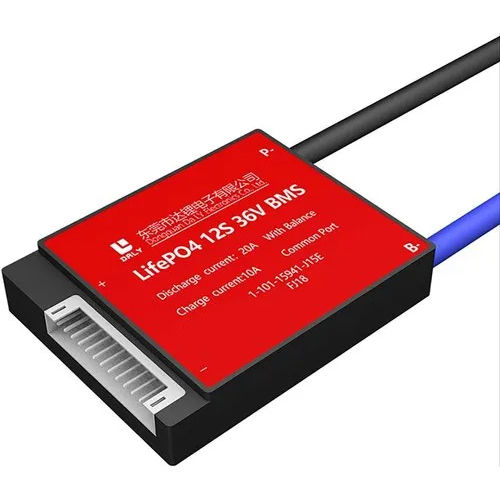
An important component in preserving a battery pack’s functionality and health is a BMS battery management system LiFePO4. The safety, longevity, and dependability of a battery system can all be seriously impacted by several serious risks in the absence of a BMS for lithium batteries.
Without a BMS for lithium batteries in place, overcharging LiFePO4 batteries poses a serious risk. Excessive voltage levels from overcharging can shorten the battery’s lifespan, cause it to overheat, or even trigger a thermal runaway that could result in an explosion or fire.
When the safe voltage limit is reached, the LiFePO4 battery management, which continuously checks the battery voltage, stops the charging process. There is no defense against overcharging without LiFePO4 battery management, which can result in permanent harm and even safety risks.
High temperatures can harm LiFePO4 batteries irreversibly because of their heat sensitivity. To prevent overheating, a BMS for lithium batteries monitors the battery temperature and initiates the necessary actions, such as lowering the charging or discharging rate or shutting down the system.
The absence of a BMS battery management system lifepo4 results in an inability to prevent overheating, which may cause harm to the battery and potentially pose a safety risk.
Tips to Choose the Right LiFePO4 BMS
- Make sure the BMS battery management system lifepo4 you select is made especially to function with LiFePO4 battery cells. The charging and discharging properties of various lithium chemistries vary, so it’s important to choose a BMS for lithium batteries that works with the particular chemistry of your battery cells.
- The nominal voltage of LiFePO4 batteries is usually 3.2 volts per cell. Ascertain the battery pack’s overall voltage and number of cells to make sure the BMS battery management system lifepo4 you select is capable of handling the voltage range. The cells within the intended voltage range should be able to be monitored and balanced by the lithium bms.
- To equalize the voltage across the cells, make sure the BMS for lithium batteries has a balancing feature or accepts external balancing. Some cells may not be overcharged while others may be undercharged thanks to balancing.
Takeaway
To sum up, the battery management system (BMS) is an essential component that controls, protects, and keeps an eye on the battery. We can better appreciate the complex technological interplay that powers both present and future electric vehicles if we understand the nature and purpose of lithium bms.
Purchasing a high-quality LiFePO4 battery management system will guarantee the dependable and safe operation of battery systems in a range of applications, including renewable energy storage and electric vehicles.
As we continue to progress and push the boundaries of what is practical for electric vehicles, the BMS will undoubtedly evolve. By following these advancements, we can make sure we are making the most of this technology to produce electric vehicles that are safer, more efficient, and more sustainable.